Posts Tagged ‘swimming pool chlorine’

What is Available Chlorine?

Thursday, August 4th, 2011

On the label of most swimming pool chlorine products you will see a reference to “Available Chlorine”. This short article will attempt to explain what that is.

In its natural state of 100% purity chlorine is a gas but  swimming pool chlorine is often refered to as “granular chlorine” or “shock chlorine” or “chlorine tablets” “or “liquid chlorine”.  In order to get from a highly poisonous gas to a stable white powder you have to add stuff. The more stuff you add the lower the content of chlorine becomes until it is low enough to remain stable in the container and for general handling.

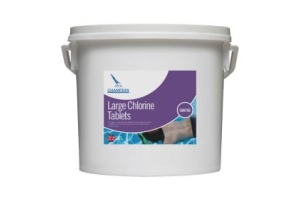
Chlorine Tablets contain chlorine in the form of trichloroisocyanuric acid (short name “trichlor”). This is the most concentrated form of swimming pool chlorine with a 90% available chlorine level.

Next comes Shock Chlorine which is calcium hypochorite (short name “cal hypo”). The strength of this can vary, as a minimum it is 65% available chlorine, but some of the fi-clor  superfast blends are 75% available chlorine.

Granular chlorine has a few different chemical names but is best known as sodium dichloroisocyanutrate (short name “dichlor”). This has 55% available chlorine.  Granular chlorine and chlorine tablets contain cyanuric acid which is a stabliser to stop the chlorine being burnt off by the sun.

Liquid chlorine, like shock chlorine, does not contain cyanuric acid stabiliser. Liquid chorine is sodium hypochlorite and contains about 15% available chlorine. Other forms with 10% or lower concentrations are available and are used by dairy farmers for sterilisation and in household bleach.

“Lower chlorine levels will still improve water quality” says new Danish research

Wednesday, March 24th, 2010

From Swimming Pool News, March 2010:


The case for using lower levels of chlorine in swimming pools has been boosted with a new research paper from Denmark.


The paper, which is expected to be available at the Swimming Pool & Spa International Conference in London in March, shows it is possible to achieve significant improvements in the water quality and improved indoor air quality in pools by using a lower content of free chlorine than are currently used in swimming pools. The trial was carried out at the Gladsaxe Sports centre in Denmark.


The trial was carried out by the DHI Group (Danish Hydraulic Institue/ Water Quality Institute), and funded jointly by the Danish Association for Swimming Pool Technology and the Danish Environmental Protection Agency.


Download the Paper